

This is The Manual
For the things you were too embarrassed to ask the group chat or too scared to have Google tell you you’re dying.
Heads Up: This info is here to educate, not diagnose. Talk to a real-life doctor for medical advice - and read our medical disclaimer before diving in!Search by Keyword:
Click by Category:
Common Conditions
Fibroids | Endometriosis | Adenomyosis | PCOS | Abnormal Uterine Bleeding (AUB) | Ovarian Cysts | Endometrial Polyps | Pelvic Pain
BV | Yeast Infection | HPV | Trichomonas | Herpes | Ureaplasma/Mycoplasma | Syphilis Gonorrhea/Chlamydia | PID | HIV | Hepatitis B&C
UTI | Urinary Incontinence | Prolapse | Vulvodynia | Bartholin’s Cyst | Pelvic Floor Dysfunction
Your Cycle
Anatomy 101
Fertility
Tracking Ovulation | Infertility
Procedures & Treatments
Hysterectomy | Myomectomy | Hysteroscopy | Endometriosis Surgery | Uterine Artery Embolization (UAE) | Endometrial Ablation | Prolapse Surgery | Post-Op Recovery | GnRH Meds
Endometrial Biopsy | IUD Insertion | Colposcopy | LEEP | Pelvic Ultrasound | MRI
Women’s Wellness
Birth Control | Pap Smear | Pelvic Exam | The Gyno Visit
.
Menopause & More
Menopause/Perimenopause | Hormone Replacement Therapy | Vaginal Atrophy
The Sex Files
Female Orgasm | Postcoital Bleeding
Feminism & Feels
Explore the Blog:
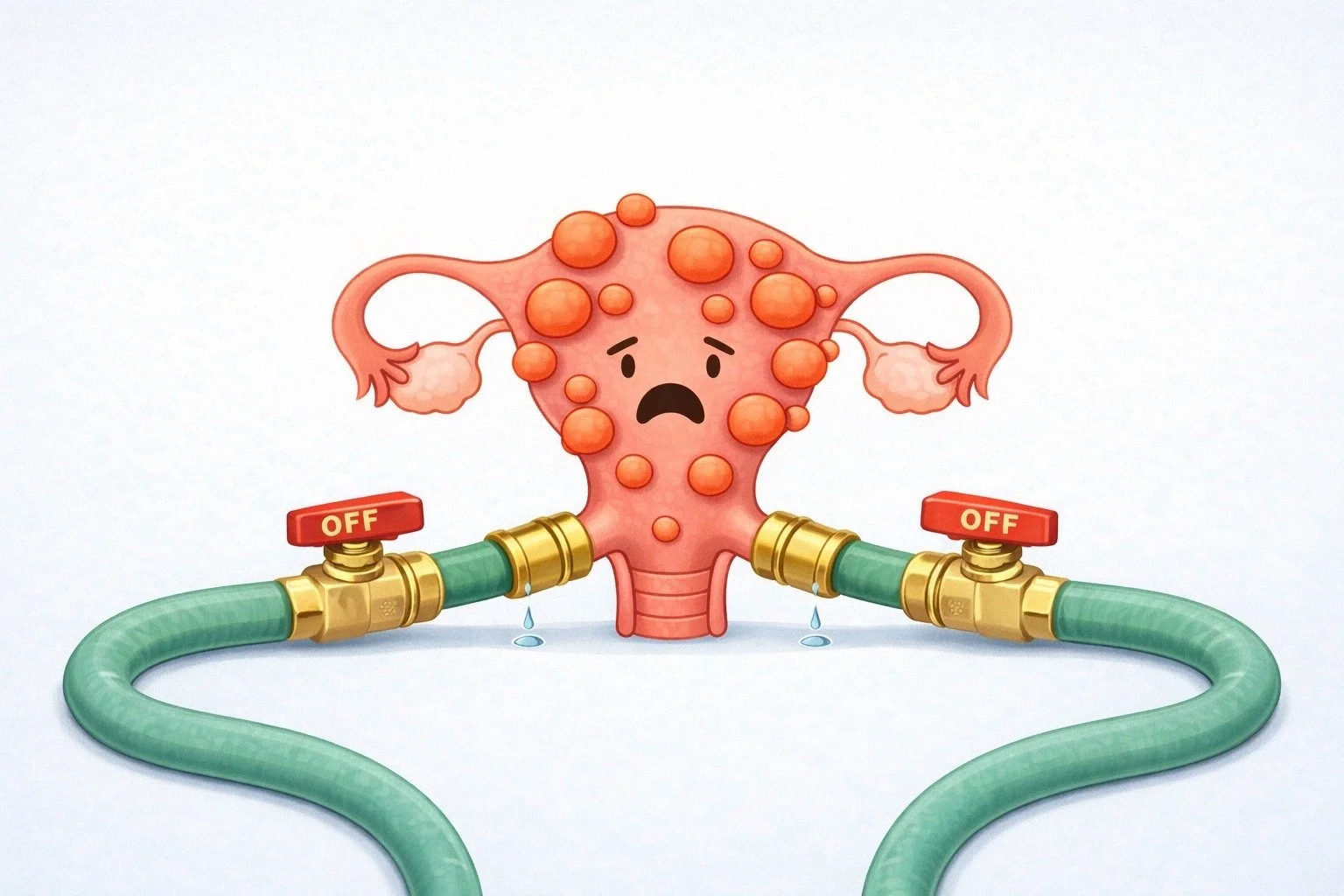
Uterine Artery Embolization: Shutting Off the Supply
Uterine artery embolization (UAE) is one of those treatments that often comes up mid-conversation - mentioned quickly, sometimes vaguely, and rarely explained in a way that actually makes sense. It’s not surgery, it doesn’t remove anything, and yet it can dramatically reduce bleeding and symptoms for the right person. This article breaks down what UAE actually does, when it’s used, and what to know before deciding if it belongs in your treatment plan.
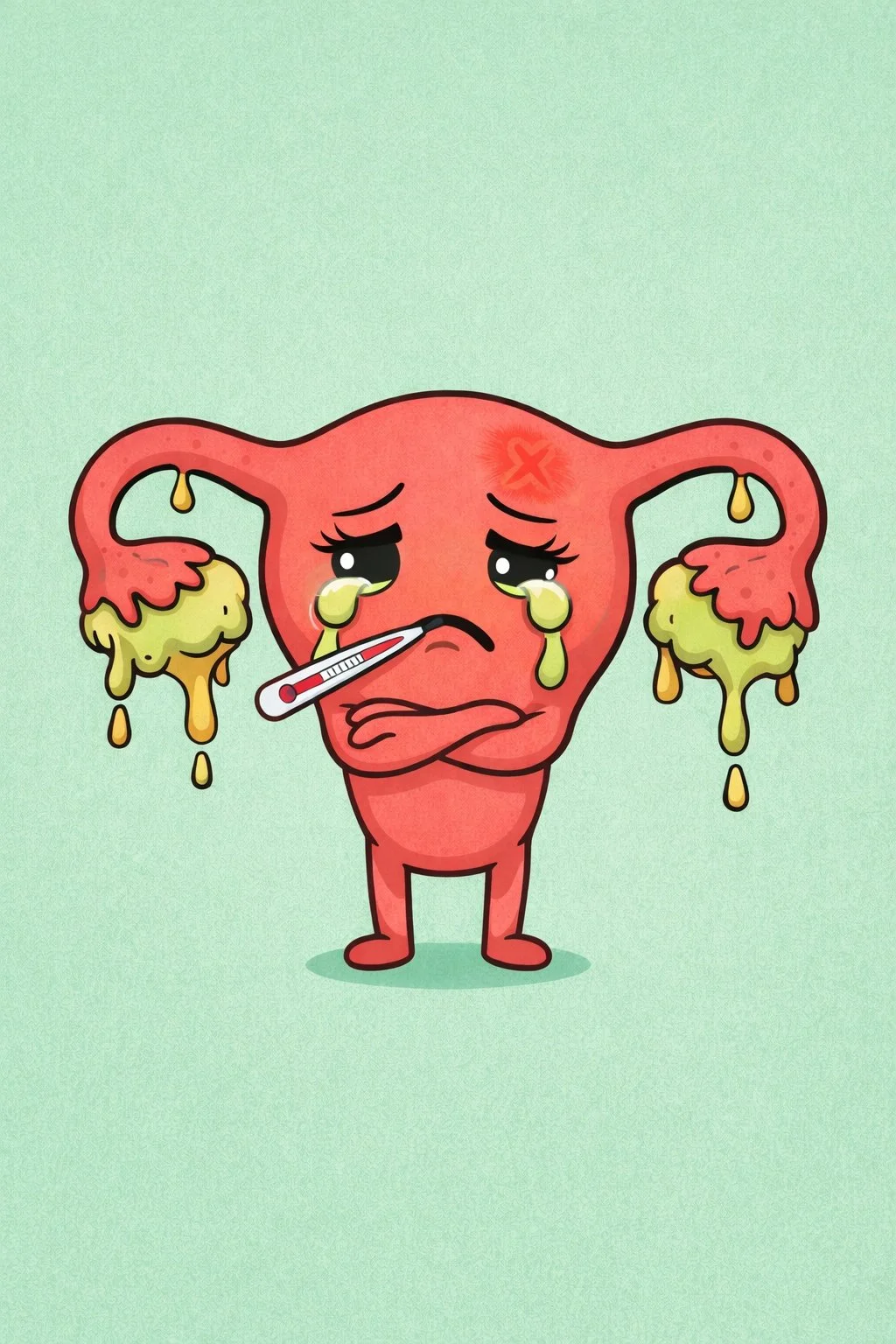
PID: When an Infection Moves In
Pelvic Inflammatory Disease, or PID, is an infection involving the uterus, fallopian tubes, and sometimes the ovaries or surrounding tissues. It can develop quietly or come on suddenly, and symptoms can range from mild discomfort to significant pain and illness. PID is very treatable when caught early, and recognizing it promptly matters because untreated infection can lead to longer-term complications.
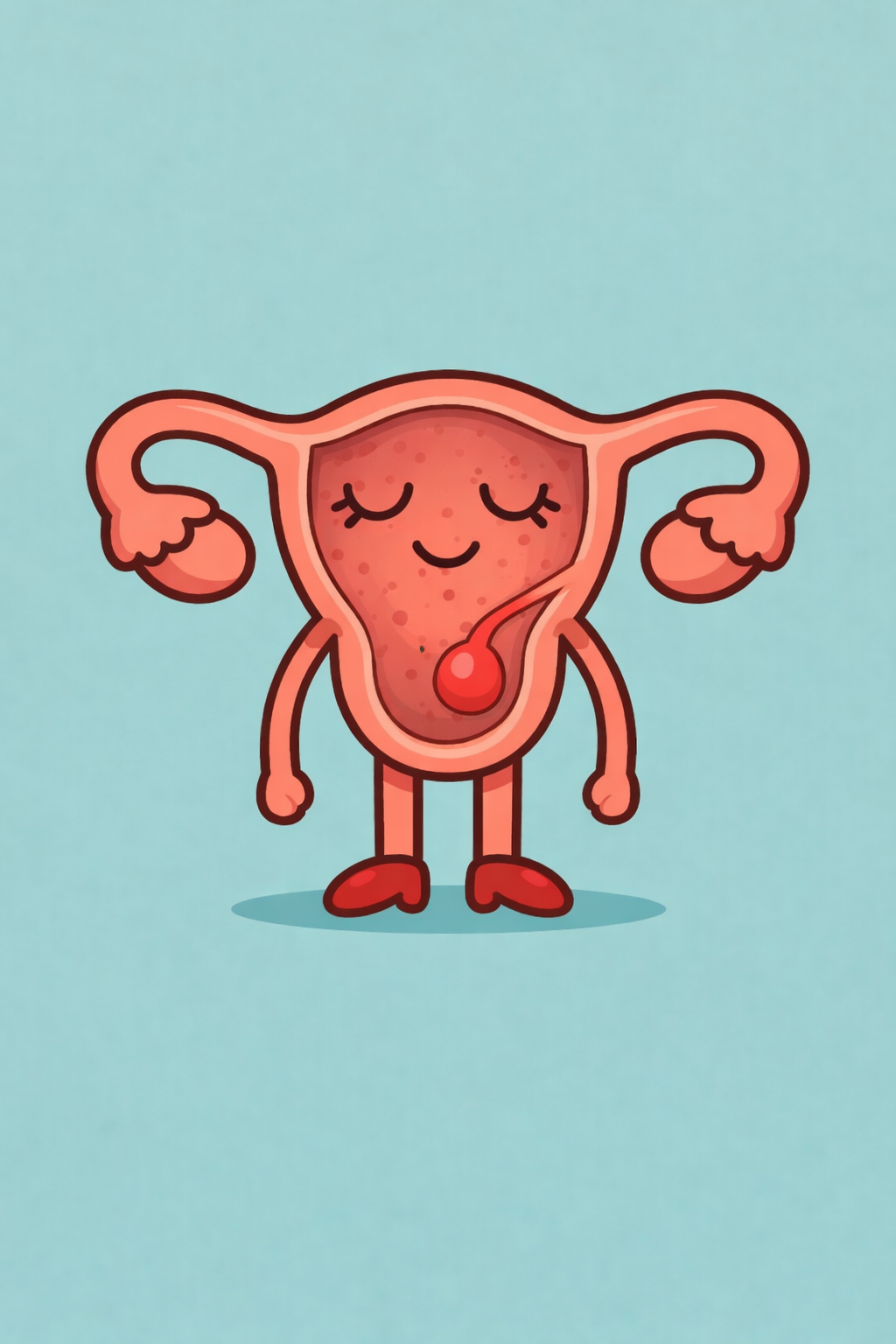
Endometrial Polyps: Common Growths in the Uterus
Endometrial polyps are one of the most commonly encountered gynecologic findings, especially when someone is being evaluated for abnormal uterine bleeding. They’re often found incidentally on ultrasound or during a workup for irregular spotting, heavier periods, or bleeding after sex. While hearing the word “polyp” can feel alarming, most endometrial polyps are benign and very treatable. Understanding what they are, how they’re diagnosed, and when they might need treatment can take a lot of the fear out of the process.
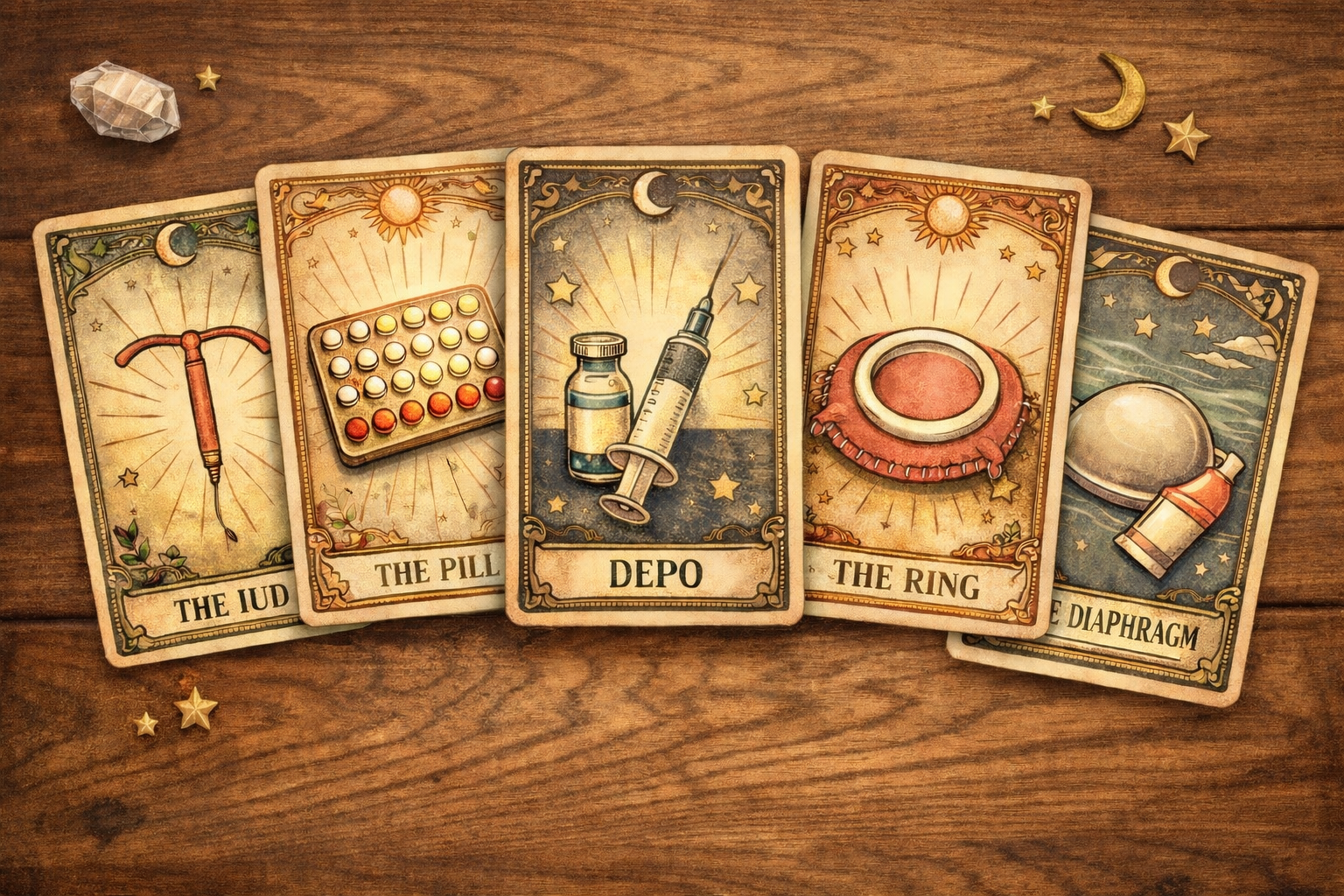
Birth Control: Finding the Right Fit
Birth control is often talked about like a single decision - pick a method, take it, move on. In reality, it affects far more than pregnancy prevention. It can change your bleeding, your pain, your mood, your skin, your libido, and how you feel in your own body. If choosing birth control has ever felt confusing or overwhelming, you’re not alone. There is no “best” option — only what fits your body, priorities, and tolerance for trade-offs.

Ovarian Cysts: The Good, the Bad, and the Ugly
Hearing the phrase “ovarian cyst” can be unsettling. Many people imagine something dangerous or urgent - especially if the finding comes out of nowhere during an ultrasound.
The reality is much calmer. Most ovarian cysts are common, temporary, and benign, and many people have them without ever knowing it. The key is understanding what kind of cyst it is, whether it’s expected, and when it actually matters. This article breaks that down.

Abnormal Uterine Bleeding: When Your Cycle Goes Off Script
If you’ve ever been told you have abnormal uterine bleeding, you’re not alone. This is one of the most common reasons people see an OBGYN.
Hearing the word abnormal can immediately send your mind to worst‑case scenarios - and that’s understandable. But abnormal uterine bleeding does not always mean something bad has happened, and it definitely doesn’t automatically mean something serious.
What it does mean is that your bleeding pattern deserves a closer look.
This article is here to clarify the many different ways bleeding can be considered “abnormal,” what clinicians are thinking about when this comes up, and how abnormal bleeding is usually evaluated and managed — without panic.

Pelvic Ultrasound: A Window Into the Pelvis
A pelvic ultrasound is one of the most common tests ordered in gynecology. If you’ve been having pelvic pain, abnormal bleeding, irregular cycles, or fertility questions, this is often one of the first tools your provider reaches for.

Vulvodynia: A Pain in the You-Know-Where
If you’ve been dealing with vulvar pain that doesn’t seem to have a clear cause, you’re not alone and you’re not imagining it. Vulvodynia can be frustrating, isolating, and confusing, especially when exams and tests keep coming back “normal.” But vulvodynia is a real, recognized condition, and there are ways to manage it.
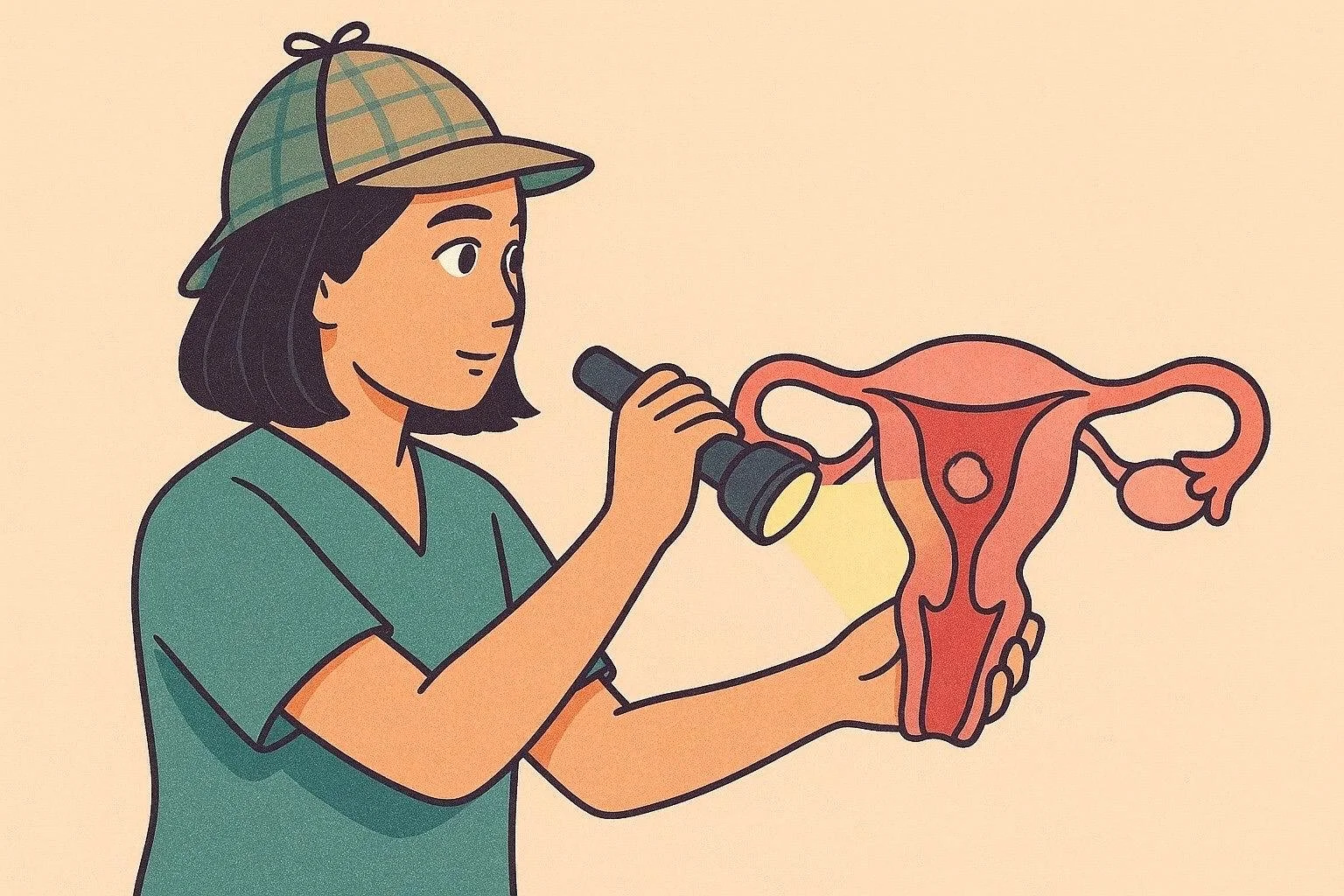
Hysteroscopy: A Look Inside the Uterus
Hysteroscopy sounds intimidating, but it’s actually one of the most straightforward and useful tools we have for understanding what’s going on inside the uterus. Think of it this way: you would never buy a house based solely on listing photos. Photos are helpful, but they’re limited. You want to walk through the space, see it from different angles, and understand what’s really there.

Hysterectomy: What It Really Means to “Take Out the Uterus”
Few words in gynecology carry as much weight as hysterectomy. Whether it’s said casually (“they just took everything out”) or whispered in fear, it tends to make people pause. But a hysterectomy isn’t one single procedure—it’s a spectrum of options that look a little different for everyone. Here’s what it really means, what’s actually removed, and what to expect along the way.

Bartholin’s Cyst: When the Plumbing’s Backed Up
You’re minding your business one day and notice a lump near your vaginal opening. Cue instant panic. Before your brain jumps to the worst-case scenario, take a breath. You might have what’s called a Bartholin’s cyst—a common and completely treatable reason for a lump “down there.”

Fibroids: The Uninvited Guests
The uterus is a remarkable organ. It’s built to go from the size of a tennis ball to the size of a basketball in just nine months, growing and housing an entirely new human being along the way. That’s miraculous. No other organ in the body can expand, contract, and regenerate quite like it.
But with that much power comes a lot of responsibility, and a few design flaws. Complex systems are prone to glitches, and fibroids are one of them. Think of them as a glitch in the uterine code: a spot where the muscle tissue gets a little too enthusiastic and starts multiplying in one area, forming a firm, rubbery ball inside or on the uterus. They’re extremely common, usually benign (non-cancerous), and vary widely in size and effect. Let’s break down what they are, why they show up, and what to do about them.

Endometrial Biopsy: Why It’s Done and What to Expect
If you’ve just been told you need an endometrial biopsy (EMB), you might be feeling a mix of confusion, anxiety, and curiosity. That’s completely normal. This procedure can sound intimidating, and for some people it’s genuinely uncomfortable. Understanding what’s happening, why it’s being done, and what to expect can help you feel a little more in control when it’s time for your appointment.

Vaginal Atrophy: The Dry Truth
Let’s talk dryness down there. Vaginal atrophy, or genitourinary syndrome of menopause (GSM), happens when declining estrogen levels lead to changes in the vaginal and urinary tissues. Think of estrogen like nutrients for those tissues—when levels drop, it’s like a garden not getting watered. The skin might even become thinner, less elastic, and less able to produce natural moisture. This can make the skin itchy, irritated, and dry, making things like sex, pelvic exams, or even sitting too long uncomfortable. The pH level shifts too, allowing fewer “good” bacteria (like lactobacilli) and more irritation-causing microbes to move in, sometimes leading to infections or recurrent BV-like symptoms.

Herpes Happens: What to Know and How to Deal
If you’ve just been told you have herpes, take a breath. You’re not broken or gross, and you’re definitely not alone. Herpes is one of the most common infections on the planet, and most people who have it don’t even realize it. It’s a virus, not a verdict, and the more we talk about it, the less scary it gets.

BV: When the Party Gets Hijacked
Bacterial vaginosis — or BV — is one of the most common vaginal conditions out there, and also one of the most misunderstood. It’s frustrating, it can be recurrent, and it rarely behaves like a neat, one-and-done infection.
If you’ve ever thought, “I treated this… so why does it feel like it’s back?” — you’re not imagining things. BV isn’t really about catching something. It’s about balance. And balance, especially in a vaginal microbiome, can be surprisingly delicate.
Let’s break it down — clearly, honestly, and without blaming your body.

Yeast Infection: The Itch That Won’t Quit
Yeast infections are incredibly common. And while the name might sound like something you'd expect to be gross or shameful, the truth is they’re just a very normal overgrowth of a fungus that lives in and on your body. They're manageable, treatable, and most importantly — not your fault.
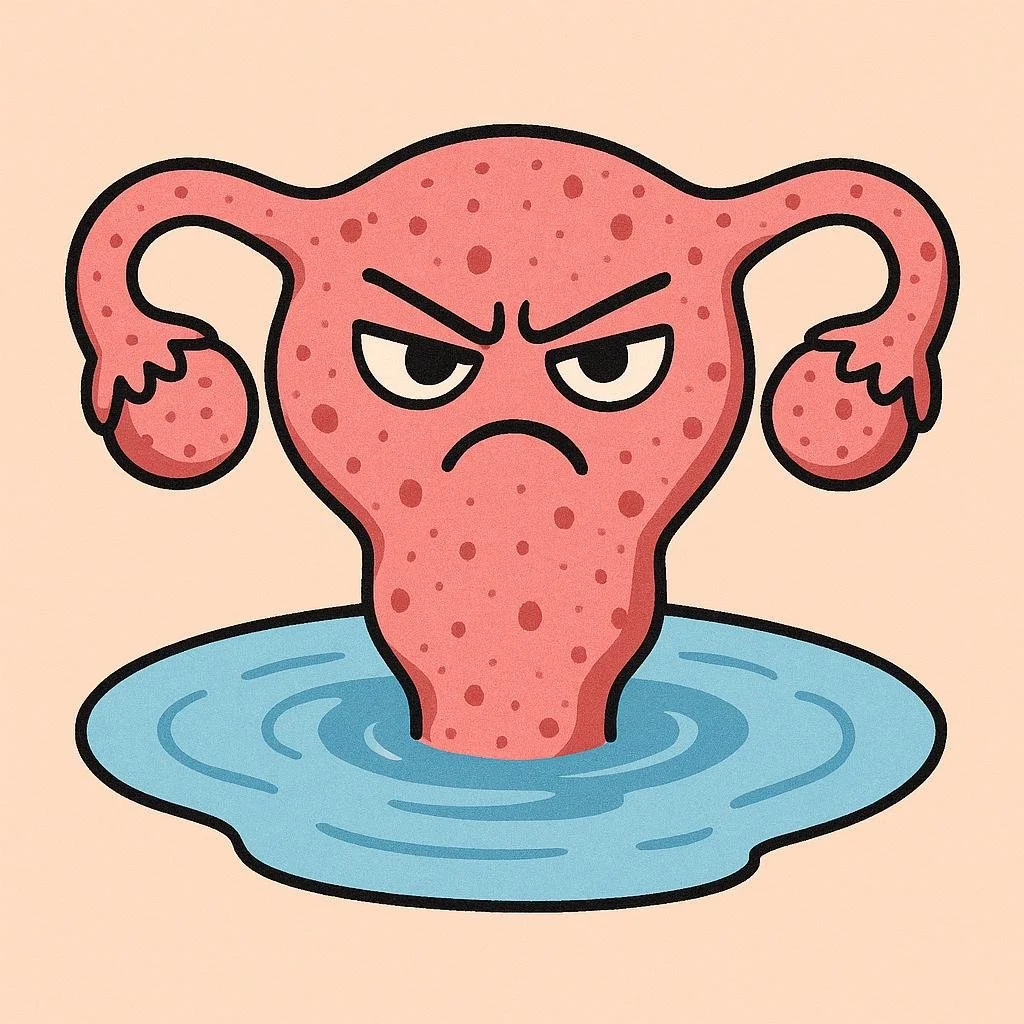
Adenomyosis: The Angry Uterus
Ever feel like your uterus is trying to kill you every month?
Like the cramps are intense, the bloating is relentless, and the bleeding looks like a crime scene?
This could be adenomyosis - the angry uterus. It’s surprisingly common, but way less talked about than conditions like endometriosis or fibroids. If you're dealing with pain and bleeding and no one has given you a name for it, this might be it.

Pelvic Floor Physical Therapy: Your Guide to a Stronger, Happier Pelvis
Whether you’re leaking when you laugh, feeling pressure where you shouldn’t, or struggling with pain no one seems to understand, pelvic floor therapy offers a path toward healing that too many people still don’t know exists.
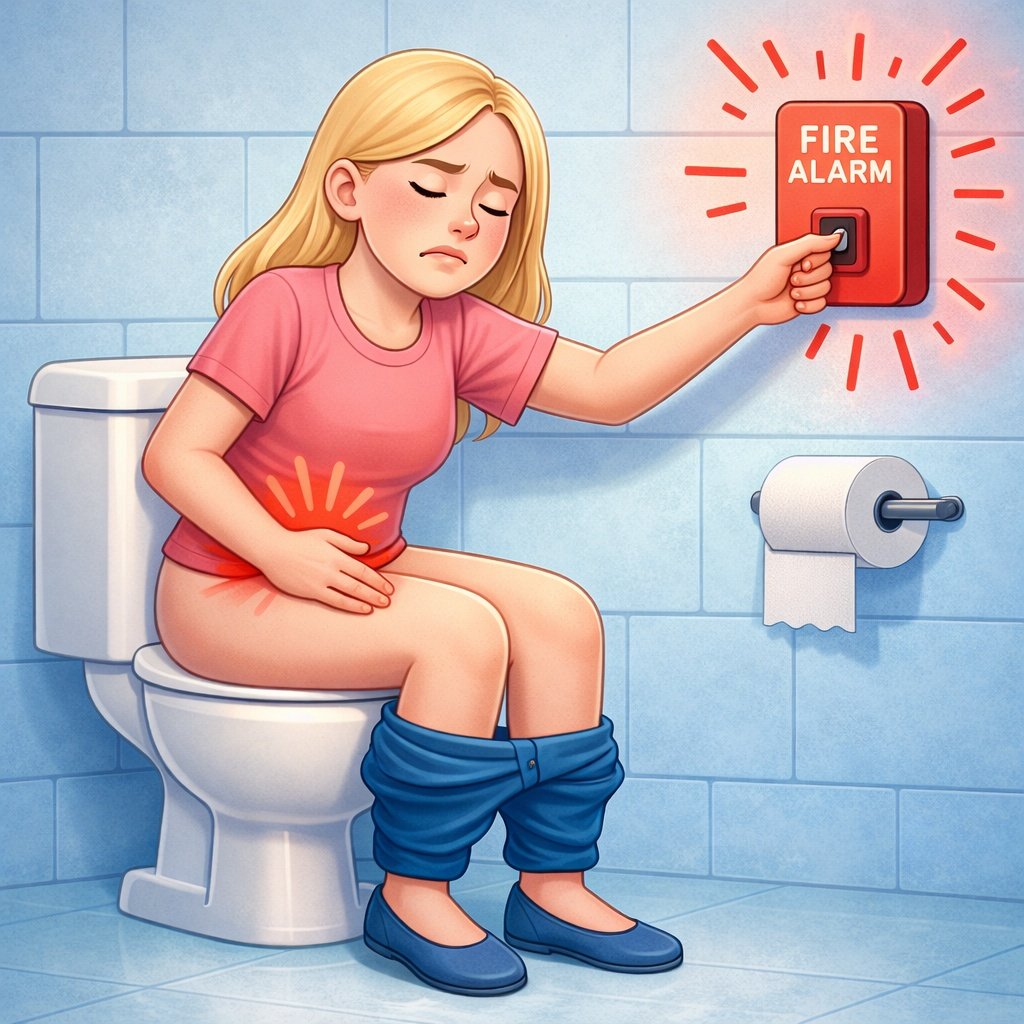
UTI Survival Guide: Your Burning Questions Answered
This guide covers what a UTI actually is, how to treat one, what not to do, and how to (hopefully) prevent it from happening again.
Sign Up for our Newsletter so you don’t miss out when new articles drop!
Can’t find an article about a topic you’re curious about?

Join the Femanual Community!
Join our email list and become part of the Femanual community — people who are getting to know their bodies, and learning to love them.
We’ll send you a heads-up when new articles drop or questions get answered, so you can stay informed, stay curious, and stay connected.